Founder & Mobile Growth Strategist


Founder & Mobile Growth Strategist

The app growth landscape moves fast. Every month brings new platform updates, policy changes, benchmark reports, and market trends that shape how apps are discovered, acquired, and monetised. Keeping up with everything is a challenge, especially when the most valuable insights are scattered across dozens of sources.
That's why we're launching the Scalebay app growth digest. Each edition brings together the updates that matter most to app marketers, growth teams, and publishers, along with the key takeaways and what they mean for your app growth strategy. From ASO and paid acquisition to AI, monetisation, and platform changes, here's what caught our attention this summer.
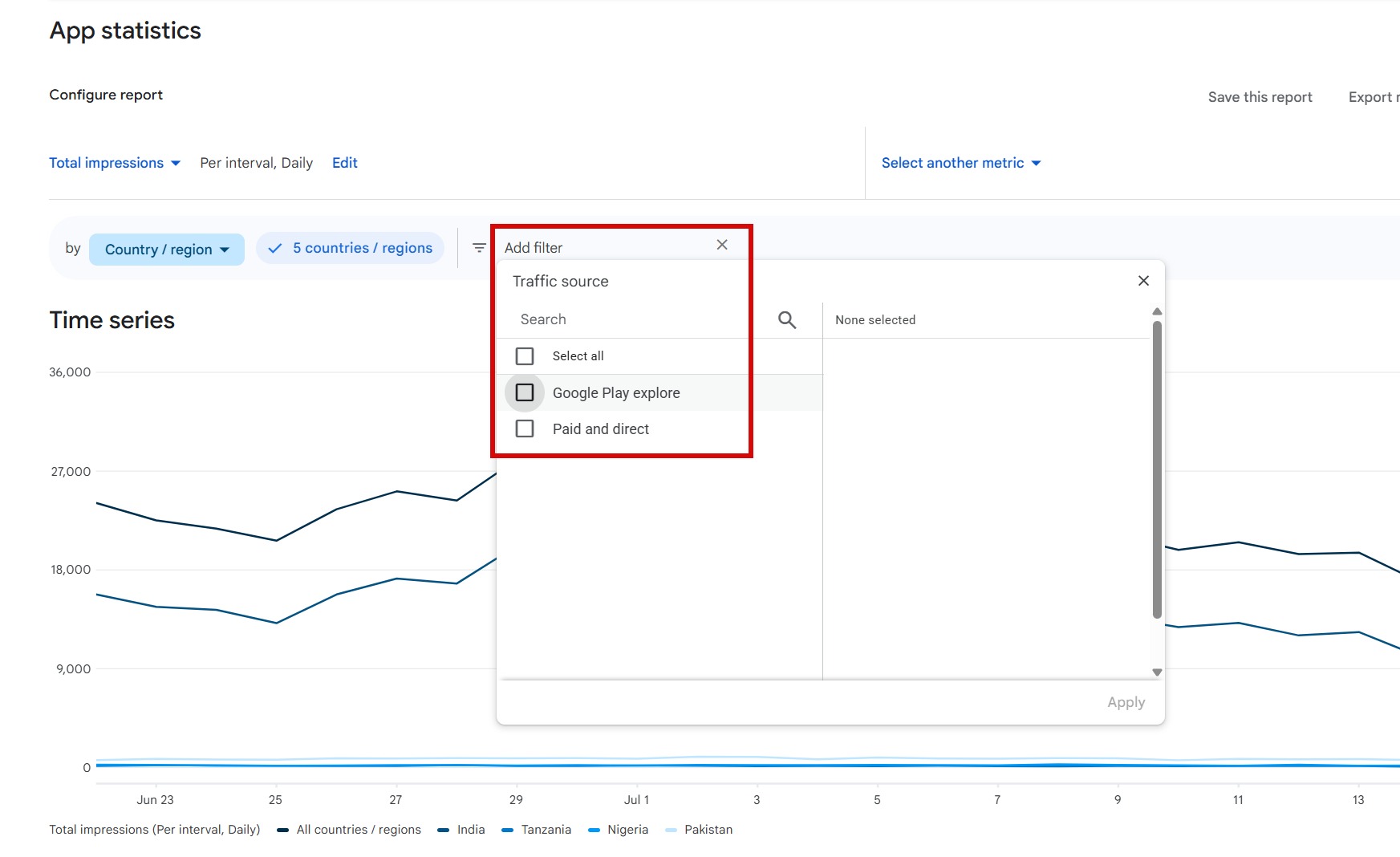
Previously, Google Play only reported Store Listing Visitors (page views) and Store Listing Acquisitions (installs). Impression data wasn't available.
It now appears that traffic from generic keyword searches is classified under Explore, while Search impressions, including branded and closely related searches, are grouped under Paid & Direct.
For marketers and product owners: if your app has low impressions, it usually indicates poor visibility for your target keywords. If you receive plenty of impressions but your conversion rate is low, focus on improving your store listing assets, such as your app icon, screenshots, and preview video, to improve conversion rates and align your app well with the algorithm.
You'll find it under: Statistics → Reach → Impressions
Raising your minimum iOS version is increasingly a business decision. RevenueCat found that 88% of active subscribers are already on the latest iOS version, compared to 79% of all iPhones. For many subscription apps, dropping support for older iOS versions reduces development and testing overhead, speeds up feature delivery, and provides access to the latest Apple APIs.
For internal teams, the right decision still depends on your own user base, so review your OS adoption and revenue distribution before increasing your minimum supported iOS version.
AppTweak's ASO Trends & Benchmarks study found that the highest-performing apps don't treat App Store Optimisation as a one-time project. Instead, they continuously test and refine their store presence to keep pace with changing user behaviour and App Store algorithms. The research shows that top apps update their metadata and creative assets more frequently, maintain stronger ratings and reviews, and take advantage of features such as In-App Events, Custom Product Pages, and A/B testing.
These ongoing improvements help increase keyword visibility, improve conversion rates, and drive sustained organic growth, highlighting the importance of treating ASO as an iterative, data-driven process rather than a set-and-forget activity.
Google's move to support third-party app stores marks one of the biggest changes to Android app distribution in years.
For app publishers, it creates new opportunities to reach users through alternative marketplaces without relying solely on Google Play for discovery. Developers will have greater control over where their apps appear, with the ability to opt in, opt out, or manage distribution on a store-by-store basis.
While this opens new acquisition channels and increases visibility, it also introduces additional considerations around marketplace management, branding, user support, and analytics. As alternative app stores mature, publishers will need to evaluate which channels deliver meaningful growth and align with their distribution strategy.
Sensor Tower's State of AI Apps in APAC 2026 report highlights how generative AI has become the fastest-growing segment in the app economy. Between Q2 2025 and Q1 2026, GenAI app revenue in APAC grew 232% year over year to US$6.1 billion, with AI Assistants leading the market while specialised categories such as AI Companions, AI Agents, and AI Image & Video apps continued to gain momentum.
The report also shows that localised products and region-specific marketing strategies are driving stronger adoption across key APAC markets, including Japan, South Korea, India, and Southeast Asia.
For app marketers and publishers, the opportunity lies beyond simply adding AI features. Success will come from building AI experiences that solve a clear user problem, localising products and creatives for each market, and refining monetisation strategies as competition across the AI ecosystem continues to intensify.
Google is introducing AI transparency labels across Search, YouTube, and Discover, allowing users to see when an ad has been created or edited using generative AI. Ads built with Google's AI tools will be labelled automatically through a new "How this ad was made" section, while advertisers using third-party AI tools are expected to disclose AI usage themselves.
For app marketers and publishers, this signals a shift towards greater transparency in AI-powered advertising. As AI-generated creatives become more common, success will depend less on whether AI was used and more on the quality, relevance, and authenticity of the creative itself.
Sensor Tower's June 2026 mobile games rankings show that live service execution continues to be the biggest driver of success.
Whiteout Survival claimed the top spot for global revenue, while long-standing titles such as Royal Match, Honor of Kings, MONOPOLY GO!, and Gossip Harbor remained among the highest earners through regular content updates, seasonal events, and strong monetisation strategies. On the download charts, publishers continued to scale user acquisition through a mix of viral gameplay, regional expansion, and ongoing LiveOps.
For app marketers and publishers, the takeaway is clear: sustainable growth comes from retaining and monetising existing users through continuous engagement, rather than relying solely on new user acquisition.
The mobile app ecosystem never stands still, and staying ahead means understanding which changes deserve your attention and which are simply noise. We'll continue to track the latest platform updates, industry reports, and market trends, then break down what they mean for app marketers and publishers in future editions of the Scalebay app growth digest.
Looking for a deeper dive? Explore more app growth insights, ASO strategies, and mobile marketing best practices on our blog.
.png)

.png)


%20(1).png)